


Sunday, November 24, 2013

Saturday, November 23, 2013

Sunday, November 17, 2013
The 'Cycle' - Rickshaw...

I was thinking about writing few lines this photograph of Rickshaw in the Street of Kolkata and two aspects of it clicked my mind, should I write the aspect of street photography where a photographer use a tricks to overlay parts of multiple subjects to tell a story or should I focus on the Rickshaw itself, which is a symbol of struggle for some to earn their daily breads like the rickshaw pullers serving a necessity or the aristocracy of rickshaw ride in places like time square or other well tourist places where it is more of a luxury, and often considered a sweet romantic ride. Well, both these aspects are very imagination provocative and instead of forcing my views, I want to leave it for you to think of ? Try visualizing...
To add more flavors, I would suggest to add a rainy season to the rickshaw to make the the thoughts much deeper for both necessity and luxury aspects. Enjoy your weekend ride of imagination with cycle rickshaw...
Sunday, November 10, 2013
Four wise men...

Anyway, I photographed them couple of years back in Pondicherry, during one of those early morning visit to the rocky beach. Well, honestly one doesn't need to go anywhere to see this kind of discussion on any and almost topic by morning walker groups. Even i used to go out regularly till my college days where many known and unknown faces used to get together, including myself and used to share a lovely bonding between the group.
I think among all the men that meet during their regular walk or exercises, I would divide the theme into 2 broad categories; One before the newspapers are delivered (like the above) and the others with newspaper, and preferable a tea or coffee in hand. I always found the pre newspaper discussions to be more close to heart than the post newspaper arrival discussions, where the theme changes as per the headlines, and eventually everybody adding expert comments around all sorts of local and global issues. Having said that, I have a huge respect for the early risers and have seen many productive discussions as well as came across many great minds in our locality, whom otherwise I would have never known. Most of these people usually love the nature and used to wake up to feel the fresh air and early sun rays and not compelled by medical problems like diabetes, losing weight etc.
Well, but the sad part is with the change lifestyle, presently these "Addas" (short meetings) are dying down too, with most of the people rushing in the morning hours are trying to address some health issues . They are all walking fast and trying to walk even faster but mostly alone with the rush to get back to work as soon as possible, missing the feel of morning "addas" with sweet tea and newspaper.
Sunday, October 20, 2013
Daddy's Day Out...

We were taught most of the games starting from indoor games to outdoors like football, cricket by our father, but with time we probably got better in terms of the skills. To make us learn those games, he initially used to lose so as to keep us motived but with age and time, we got better. I can't forget the glint of happiness I saw in his eyes and the smile, yes 'THE SMILE' when for the first time, we won a cricket game and it felt as if he won the world cup. Thanks for making us learn so many things. Wish we could again go back in time !!!
Saturday, October 19, 2013

Sunday, October 13, 2013

Friday, October 11, 2013
Oops-the chase for 'khazana' !!!

Hope you like it, have a great weekend friends !!!
Sunday, October 06, 2013
The Cyclist...

After quite some time, I ventured out today morning with my little buddy S90 to check out if I still have it in me to click 'something' and actually, came back home with some good images. It is getting nippy now in Bangalore, and it only means I will get the the magic light I seek for my shots during morning and evening hours. Most of the time it drizzles/rains in Bangalore and it does get a bit disappointing so I do not miss an opportunity of capturing shots in natural light, whenever I get it! Well, it doesn't mean that cloud or rain can't work as I like clicking in rain as well.
In terms of street photography, I think India is fast gaining to catch up with rest of the world with many talented young people showing very promising work. I'll probably talk about them some other day as I think one should definitely have a look at them to understand the Indian photo space.
Have a good weekend friends...
Wednesday, October 02, 2013

Sunday, September 22, 2013
Steps...

Sunday, September 15, 2013

Saturday, September 07, 2013

Sunday, September 01, 2013
The little Ustad...
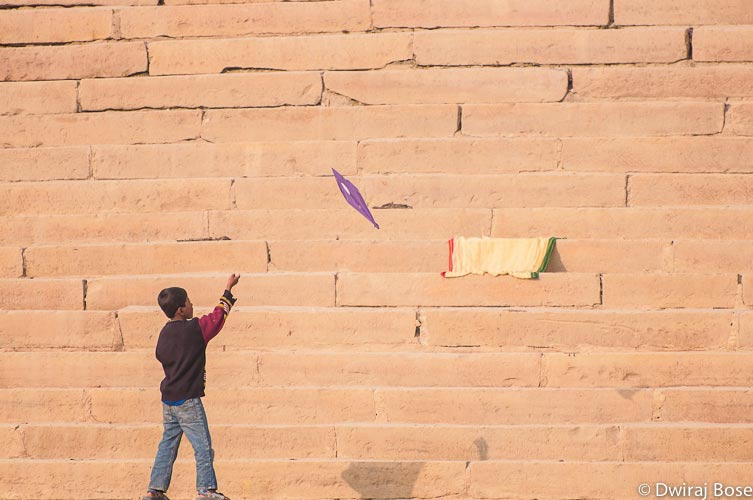
Some of the times it happens that you missed to click a picture perfectly and kept on regretting on why didn't I do this and that. But, at the same time you don't like to reject the picture as it is somewhere close to your heart. This one is similar feeling. I wish I could have a little more ground below his feet etc..
It was during one of the early winter morning in the ghats of Varanasi, feeling the serene ambience. Suddenly, something I saw a shadow in the ground and kind of circling around me. When I looked upstairs, it was a kite just above my head passing through the wind making the nostalgic 'zuuuuuu' sound. To trace the pilot, I found this little fellow in fully engrossed in ensuring a safe flight for his kite. And I got so much influenced in watching his skills, that did't bother much to take shot. A little nostalgic moment of my life...
Sunday, August 25, 2013

Subscribe to:
Posts (Atom)